
Contributor Day Nav Links
Open source is not only about building software or completing tasks. It is also about finding your place, learning from others, and growing together as a community.
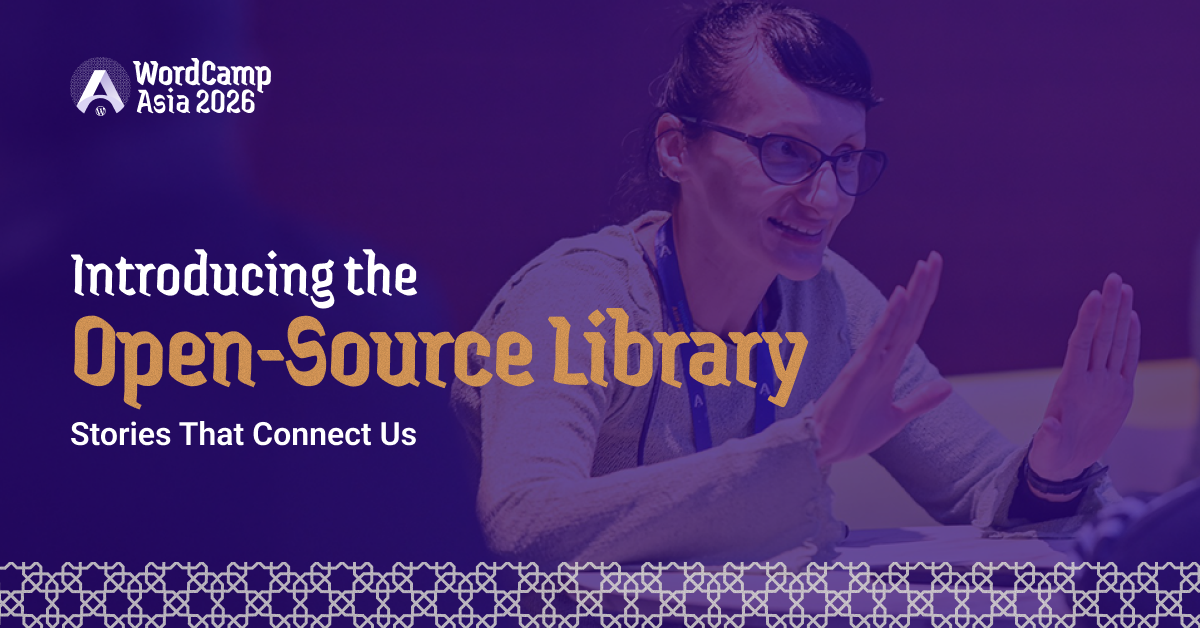
The Open-Source Library creates a safe, welcoming space where people can share real stories, lived experiences, and personal journeys from the open-source world. It centres human connection, reflection, and learning through conversation.
Inspired by the long-standing Contributor Day – Human Library tradition, this initiative carries the same core idea forward: people learning from people. The Open-Source Library adapts this approach for open source, offering conversations that go beyond tools, documentation, and workflows.
What is an Open-Source Library?

The Open-Source Library builds on the Contributor Day – Human Library format from the previous two editions of WordCamp Asia. While the name is new, the spirit remains the same. Instead of books on shelves, contributors become “open books”. They share their experiences, challenges, learnings, and reflections through one-on-one or small-group conversations. These discussions are rooted in lived experience and aim to build understanding, empathy, and stronger community bonds.


This is not a space for formal talks or prepared presentations. It is a space for honest, two-way dialogue. Participants talk about how they entered open source, the doubts they faced, the challenges they navigated, what kept them going, and how a sense of belonging developed over time. These conversations offer insights that cannot be captured in slides, talks, or documentation.
By building on the Contributor Day — Human Library tradition under a new name, the Open-Source Library reflects the unique culture, values, and realities of the open-source community.
How It Works
The Open-Source Library runs alongside Contributor Day and is completely optional.
- Open-Source Books are available at scheduled time slots throughout the day.
Each Book offers one-on-one conversations during specific time slots. Availability is posted on-site so participants can see which topics and contributors are open at different times. - Sessions are facilitated on-site.
All conversations take place in a designated Open-Source Library area and are supported by on-site facilitators to ensure sessions run smoothly, stay on schedule, and provide a welcoming environment for everyone. - Participation is coordinated by the Librarian.
A Librarian manages participant flow by guiding attendees to available Books based on interest, timing, and availability, while ensuring fair access throughout the day.
You can step in for a conversation, reflect, learn, and return to Contributor Day activities at your own pace.

How to borrow an Open-Source Book
- Check the scheduled sessions
Browse the available topics and choose one that interests you. - Select a topic with librarian guidance
Our librarians will help you check out a topic and make sure you are matched with an available time slot. - Meet your Open-Source Book
Head to your assigned spot and begin the conversation. - Talk, listen, and learn
Ask questions, share thoughts, and learn through open, human conversation. - Enjoy the experience
Keep it relaxed, respectful, and fun. This is a space to connect and learn together.
The Open-Source Library is a reminder that learning in open source does not only happen through code, documentation, or tasks. It also happens through listening, sharing, and connecting with one another. Whether you come with questions, stories, or simple curiosity, this space invites you to slow down, engage in meaningful conversation, and leave with new perspectives that stay with you long after Contributor Day ends.
The Open-Source Library is designed for one-on-one conversations and is not intended for technical support.
Who Can Participate
The Open-Source Library is open to everyone.
You may be new to open source, returning after a break, or contributing for many years. This space welcomes people who are curious, reflective, and open to learning from real experiences.


Participants come with different intentions. Some seek guidance. Some want reassurance. Others simply want to listen and understand how different people navigate open source.
There is no right or wrong way to participate. Asking questions, sharing experiences, or quietly listening are all equally valid.
What matters is openness, respect, and willingness to engage thoughtfully.
Why You Should Participate
Documentation explains how things work. Conversations explain how it feels.
The Open-Source Library offers learning that goes beyond handbooks and tutorials. Through real conversations, you gain insight into the emotional and practical realities of open source, including uncertainty, growth, setbacks, and belonging.
You may leave with clarity, encouragement, new perspectives, or reassurance that your doubts and experiences are shared by others. Sometimes, listening is as impactful as speaking.
Every conversation strengthens the human connections that make open source more inclusive, welcoming, and sustainable.
Guidelines


To keep the Open-Source Library safe and respectful, please follow these guidelines.
- Respectful Engagement. All participants are expected to engage with care and respect. Treat Open-Source Books with courtesy and appreciation for the time and experience they are generously sharing. Listen actively and approach every conversation with empathy and openness.
- Code of Conduct Adherence. All interactions within the Open-Source Library must follow the event’s Code of Conduct. This space is intended to be safe and welcoming for everyone. Any form of inappropriate, discriminatory, or disrespectful behavior will not be tolerated.
- Mindful Questions. Participants are encouraged to ask thoughtful, relevant questions that align with the purpose of the Human Library tradition. Questions should be asked with curiosity and good intent. Avoid topics or phrasing that may feel intrusive, judgmental, or inappropriate.
- Consent and Comfort. Open-Source Books are never required to answer questions they are uncomfortable with. Respect personal boundaries at all times, and be understanding if a topic is declined or redirected. A respectful pause or change in direction is part of maintaining a safe conversation.
- Time Management. Please be mindful of the allocated session time. Keeping conversations within the agreed duration helps ensure that others also have the opportunity to participate. If a discussion needs to continue, feel free to reconnect later in an appropriate setting.
Join Us!
The Open-Source Library is an invitation to slow down and connect with the people behind open source.
You do not need a goal, agenda, or plan. Showing up with curiosity is enough.
Join us during Contributor Day to listen, share, and take part in a tradition that values human connection as much as contribution. Every conversation adds to a culture of openness, empathy, and shared learning.